Case Study · Open-source Desktop App
Workprint reconstructs how a project came together from Git history, project files, and AI conversations, then turns that evidence into AI-assisted insights you can inspect.
The Problem
The decisions, the reasoning, and the dead ends live across notes, files, AI conversations, and Git history. Even when that evidence can be recovered, metadata makes it easy to claim more than it proves. Workprint had to rebuild the story without inventing one.
Role
Product strategy, experience architecture, trust model, and UX writing. I set the direction, defined what the evidence could and could not support, structured the reasoning flow, and wrote the product copy.
Visual Direction
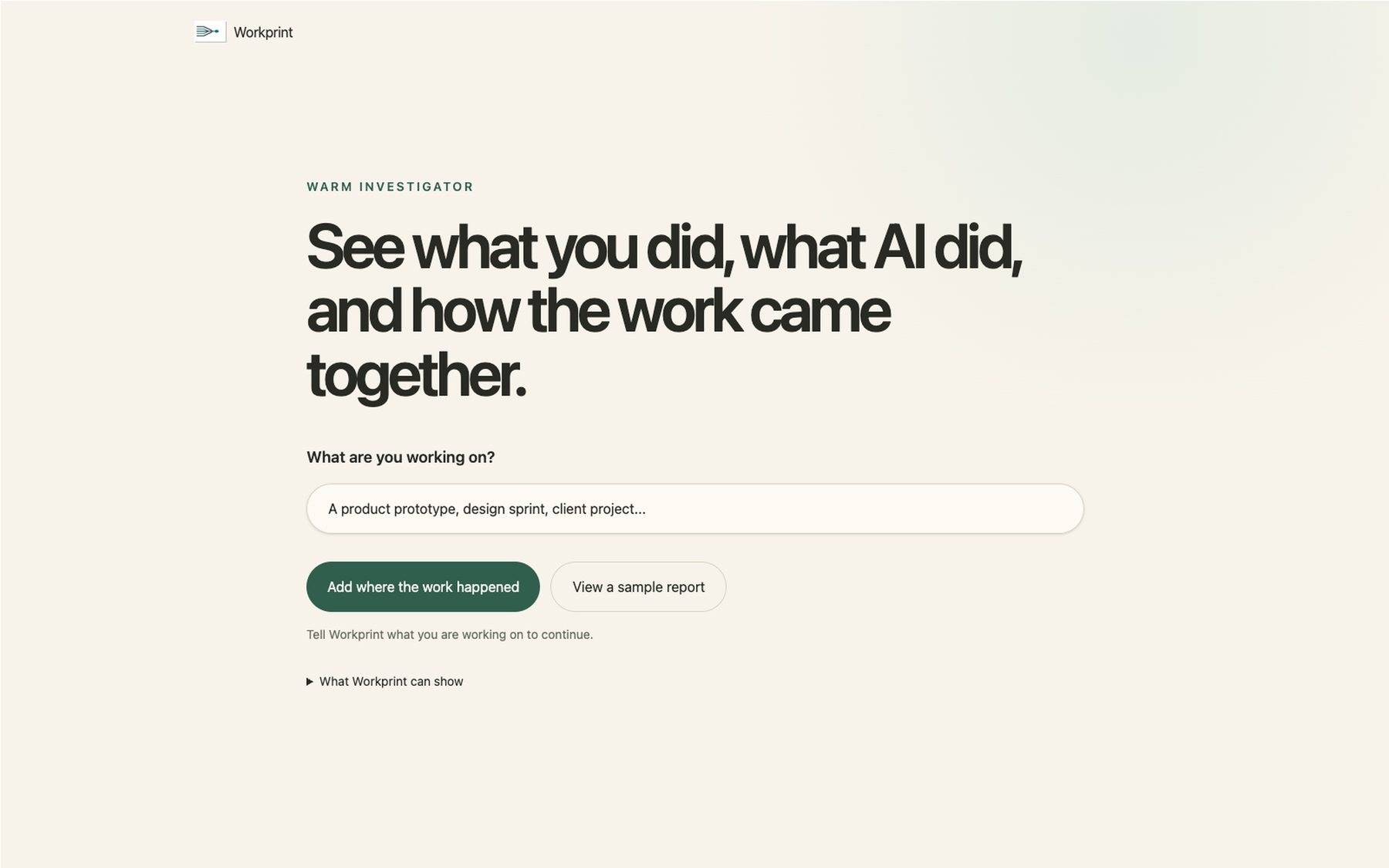
I developed a register I call "Warm Investigator": precise enough to earn trust in a reconstruction tool, warm enough that reading your own project history back doesn't feel clinical.
Collaborators
Built with ChatGPT, Codex, Claude Code, GitHub, and Figma. Each handled a different part of the work, but the product decisions, what to build and why, stayed mine. I reviewed everything before it shipped.
The Trust Model
The latest build separates what happens locally from what leaves the device, then makes every conclusion show its work.
Choose the provider
OpenAI, Claude, and Gemini appear as equal bring-your-own-key choices. There is no default, and the API key is used for that report and not saved by Workprint.
Send only what's needed
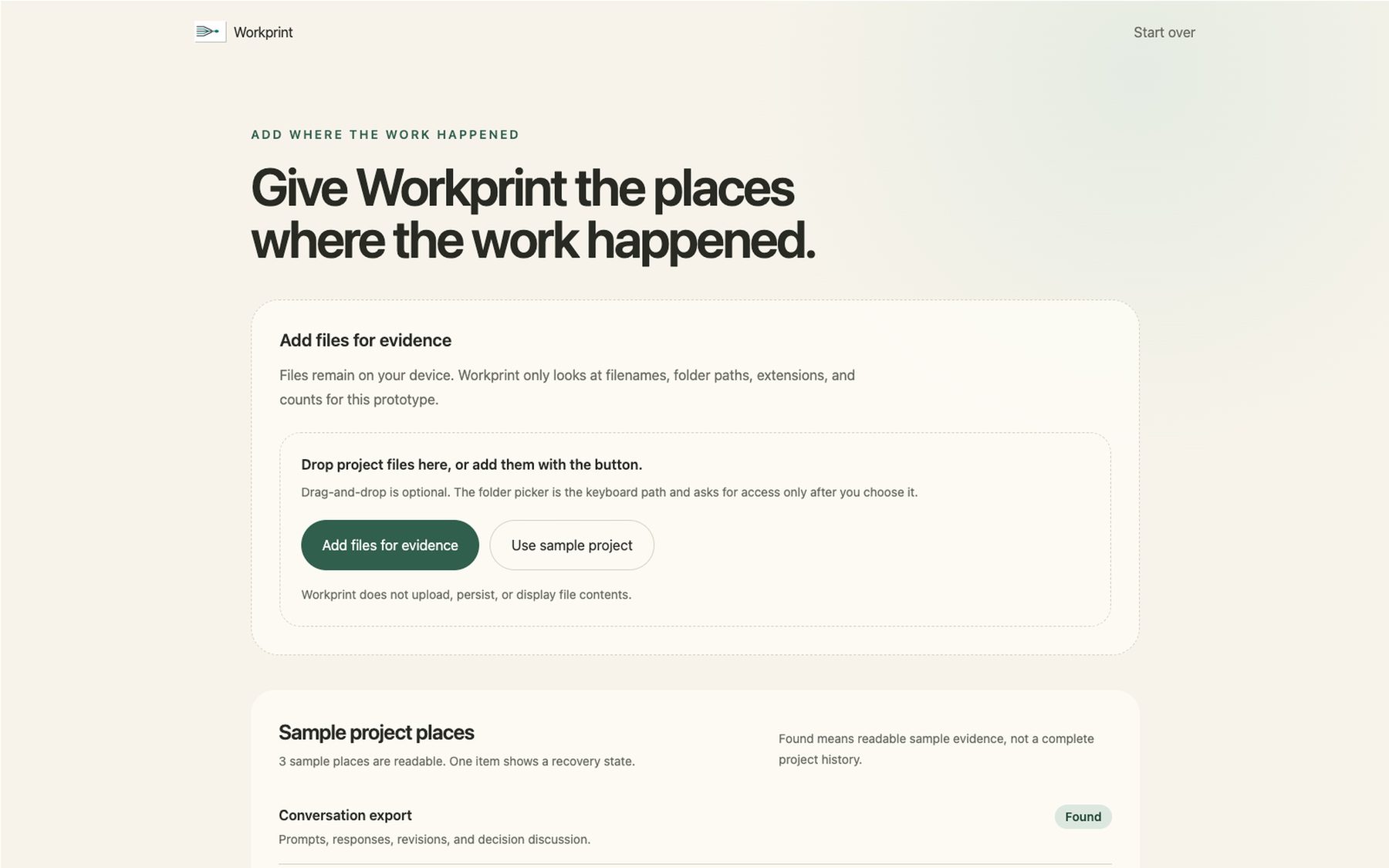
Workprint collects evidence locally. Before reasoning begins, it explains that selected excerpts and metadata will leave the device, not the whole project folder, and reminds the user to confirm they have permission to send it.
Show the evidence and the limit
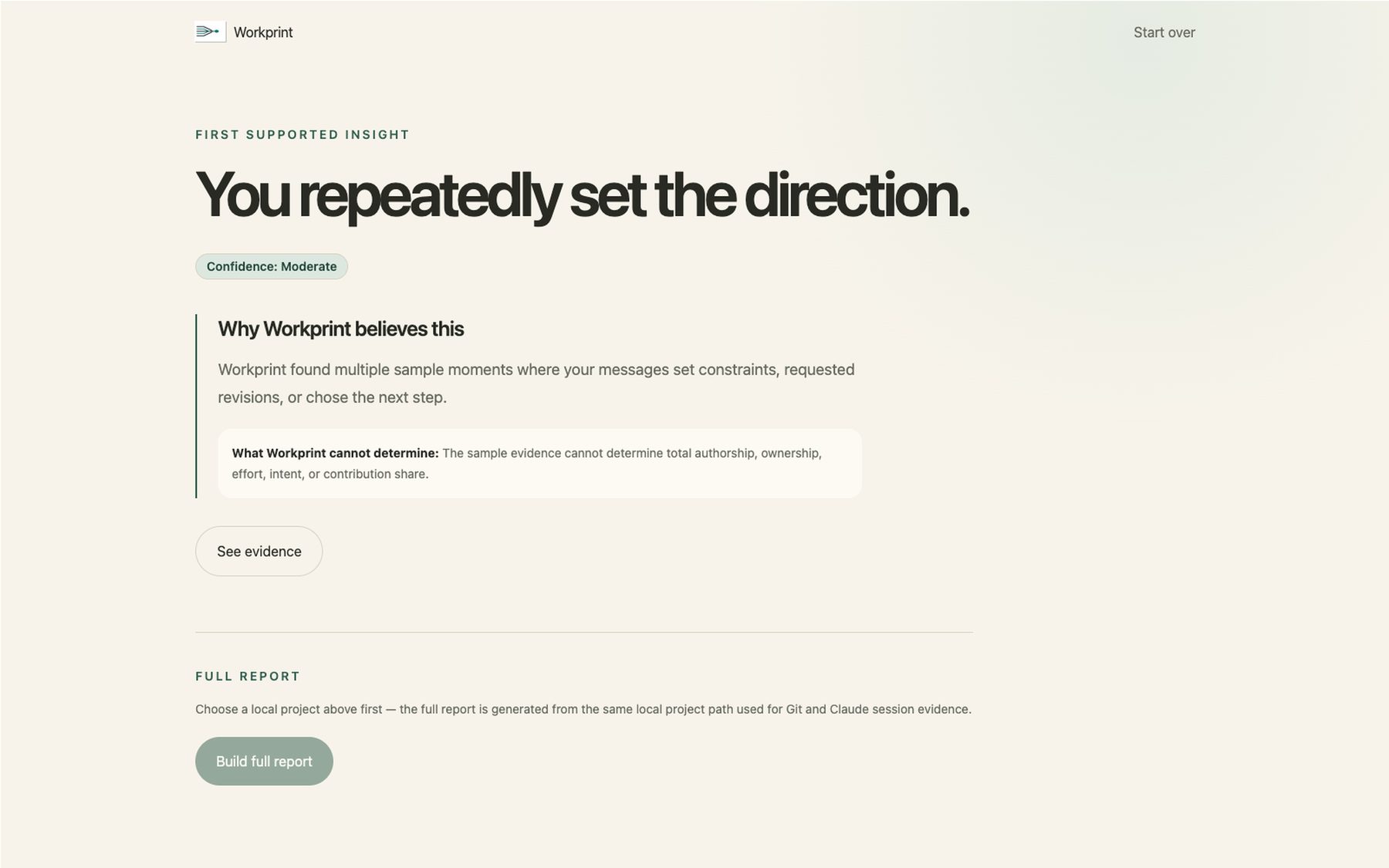
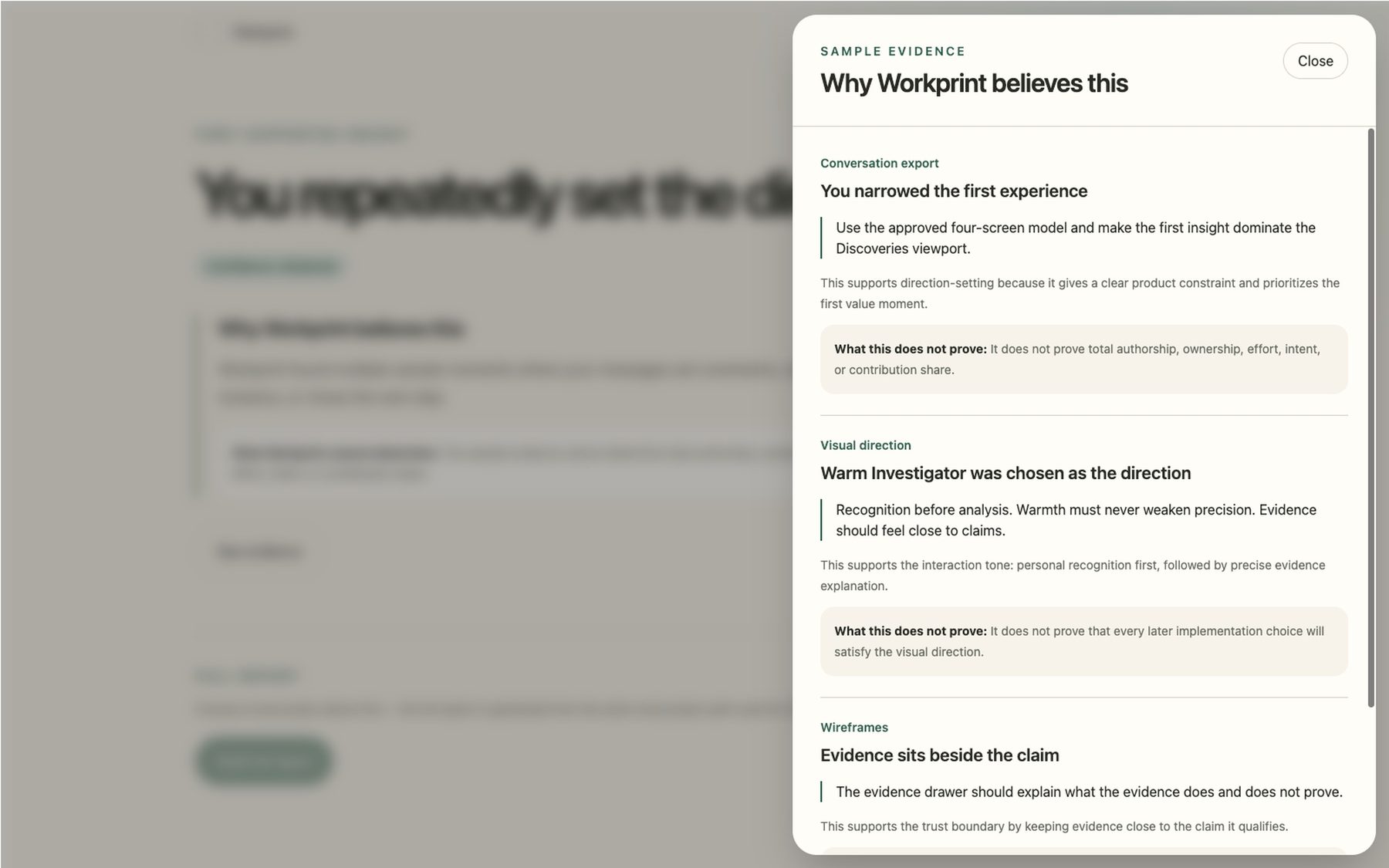
Each provider response is checked against the evidence IDs it cites. The result shows why Workprint believes the claim and what the same evidence still cannot determine.
Product Flow
The newest flow makes the handoff to AI visible, then brings the user back to the evidence before asking them to trust the result.
01 · Collect locally
Review the project files, Git history, and local AI sessions available as evidence.
02 · Choose a provider
Select OpenAI, Claude, or Gemini for the report. Workprint does not pick one for you.
03 · Inspect the result
Trace the insight back to its evidence, then read what that evidence does not prove.
Choosing sources
First discovery
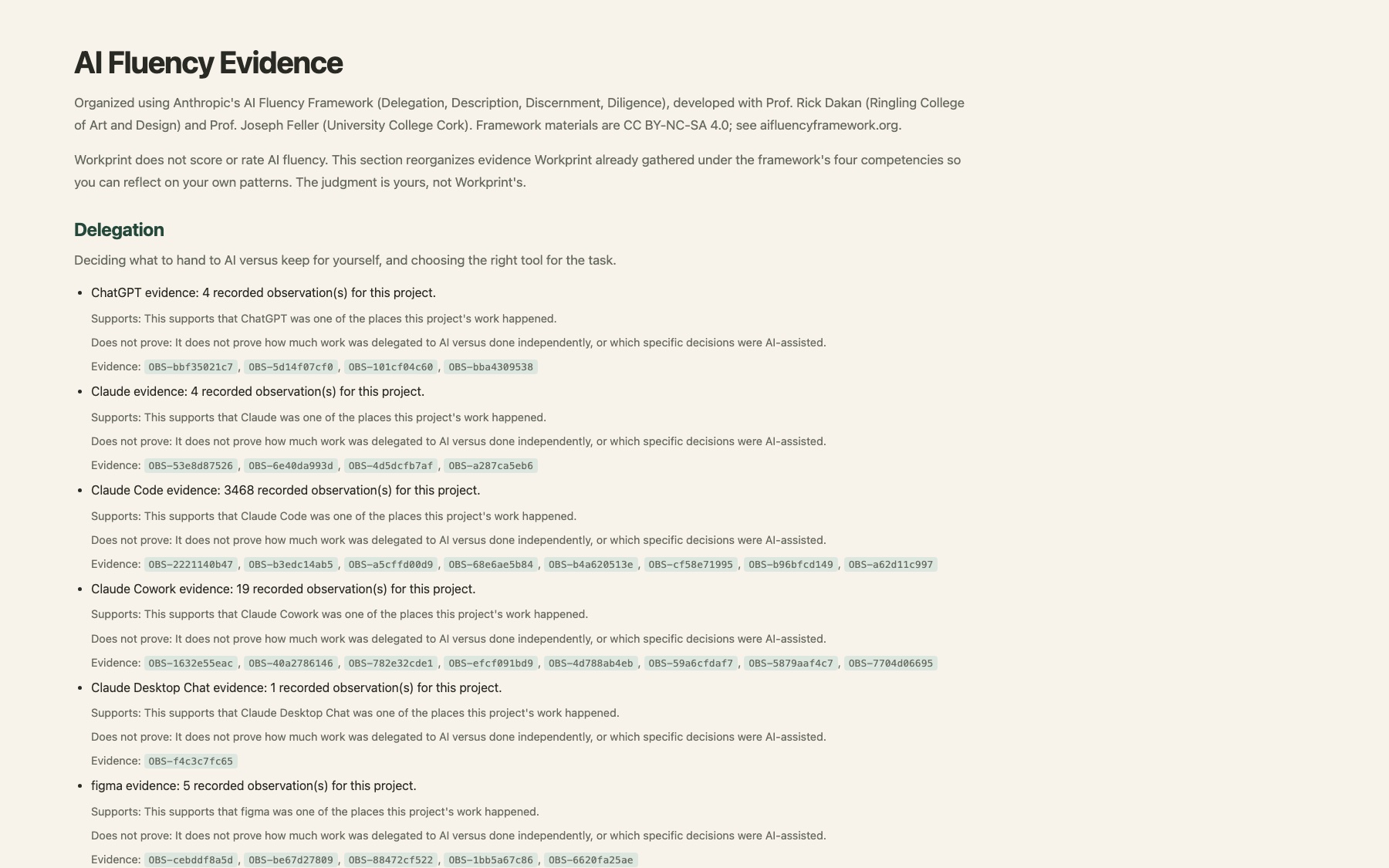
Seeing the evidence behind it
AI Fluency evidence
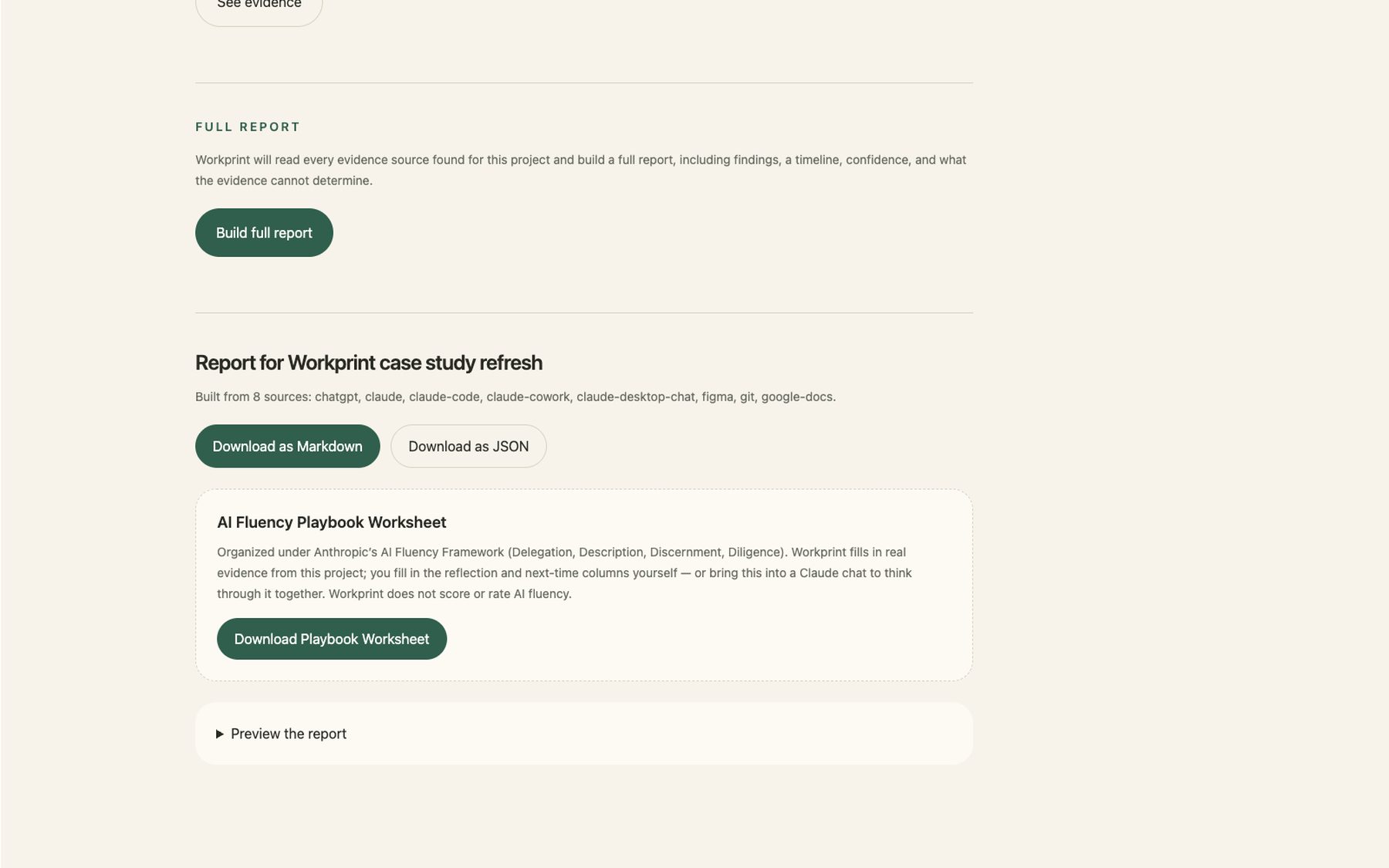
Exporting the Playbook Worksheet
No Install
No Mac, or don't want to download anything yet? The same investigation approach ships as a Claude Skill and a ChatGPT Custom GPT — drop a project folder into a conversation you already have open.
Two platforms, one set of rules
The Claude Skill and the ChatGPT Custom GPT both apply the same evidence-boundary and claim rules, so an insight means the same thing whichever one you're using.
A lighter-weight Workprint
These bundles apply the rules through instructions, not the desktop app's full deterministic validation pipeline. Good for trying the idea quickly; the desktop app remains the more rigorously checked experience.
A real example
Run on a real internal feedback-coach project, the skill's first insight read: “The user consistently took authorship of the words while directing AI to verify, structure, time, and review — a delegation pattern that held across both sessions in evidence.” Evidence-linked, not a compliment — and it named what it couldn't determine right alongside it.
A separate, technical option: MCP
Workprint can also run as a local MCP server so Claude Desktop or Claude Code calls it directly — a different integration from the Skill above, requiring this repository's Python backend running locally.
Outcome
The public alpha is a downloadable macOS desktop app. The current development build adds three-provider reasoning, evidence-linked limits, and the Claude integration above. It's still buggy, but here's what actually exists today:
Downloadable alpha
Apple Silicon macOS app
Three providers
OpenAI, Claude, or Gemini in the latest development build
Two platforms
Claude Skill and ChatGPT Custom GPT, no install required
Open source
Apache 2.0 license