Case Study · Take-home Assignment · Stripe
Feedback Coach is a Slack-based coach built on Stripe's own SBIN framework, made as a take-home assignment for a Learning Architect role. Not internal Stripe work, and the outcome of that application isn't part of this write-up.
Try it yourself: click through a real coaching session below.
The Problem
Most people never finish reading Stripe's 2,000-word SBIN framework page. The gap wasn't the content, it was personalized help applying it right when it's hardest to think straight: right before a real feedback conversation, or right after one that didn't go the way you'd hoped.
Design
Two modes, nothing heavier. Prepare structures what you want to say before a real conversation. Debrief breaks down how one actually went after the fact. No upfront self-assessment gate, people land in the mode they need and start talking.
Voice
I synthesized a register from Stripe's own Operating Principles and marketing voice: direct and warm. A vulnerable moment needs candor, not corporate distance.
Coaching logic
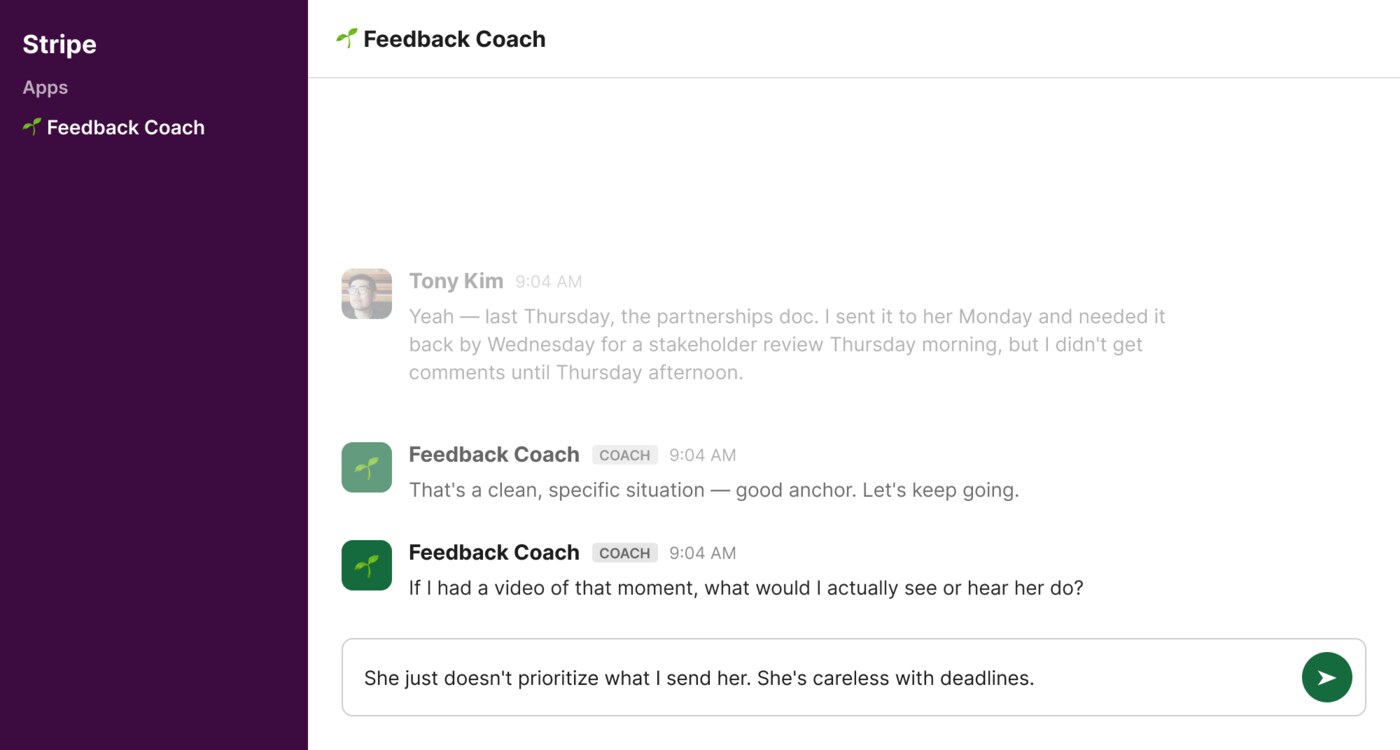
The coach is grounded in SBIN and trained on Stripe's own voice, so its advice sounds like Stripe rather than something generic. People share their actual situations, not hypotheticals, and get advice specific to what they wrote. It lives in Slack, where people already talk to their colleagues.
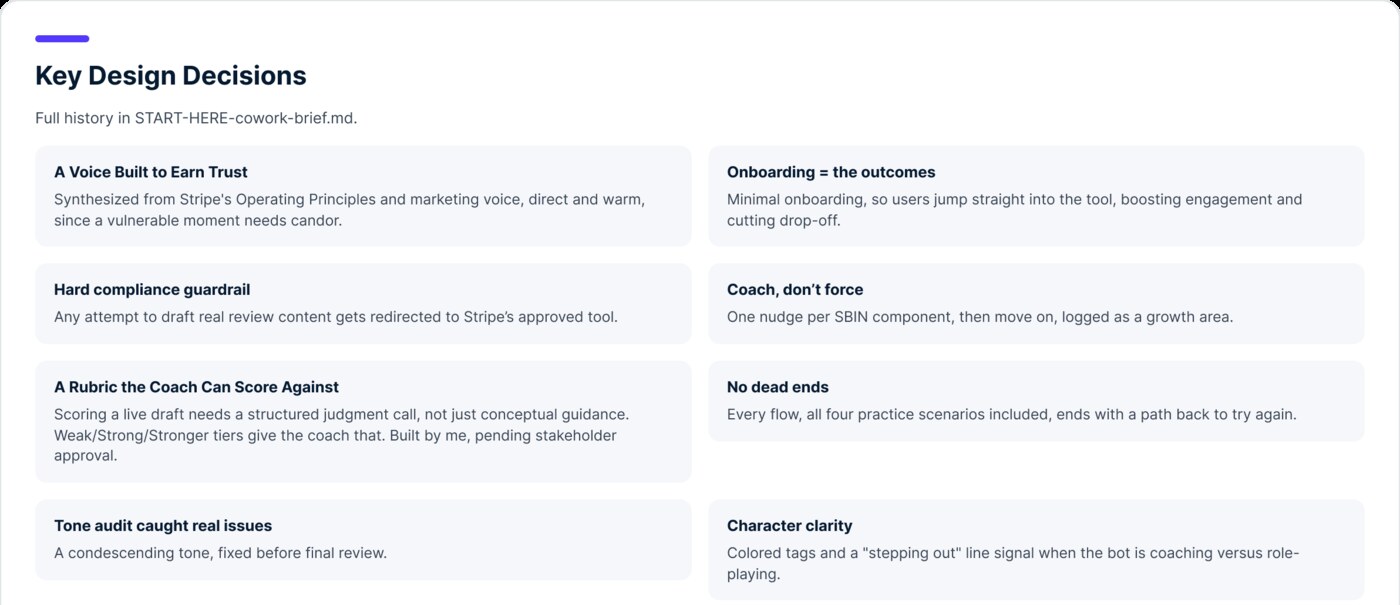
Key Design Decisions
Guardrail
Any attempt to draft real review content gets redirected to Stripe's actual approved tool. This coach is for everyday practice, not formal review documentation, and it says so upfront.
Coach, don't force
One nudge per SBIN component, then move on. Pushback gets logged as a growth area instead of blocking the conversation.
A rubric to score against
Scoring a live draft takes a structured judgment call, not just conceptual guidance, so I built a Weak / Strong / Stronger rubric myself. It's labeled as my own construction, pending real validation, not Stripe's official stance.
Character clarity
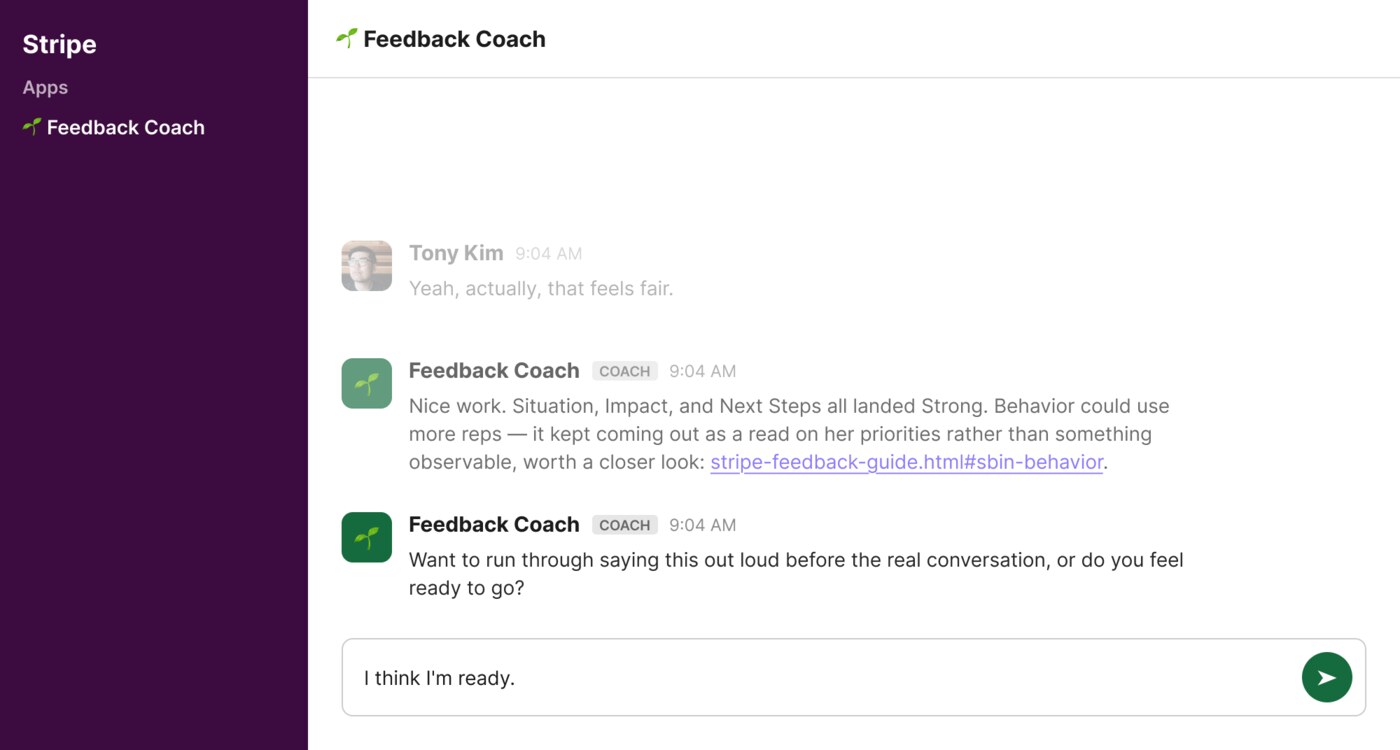
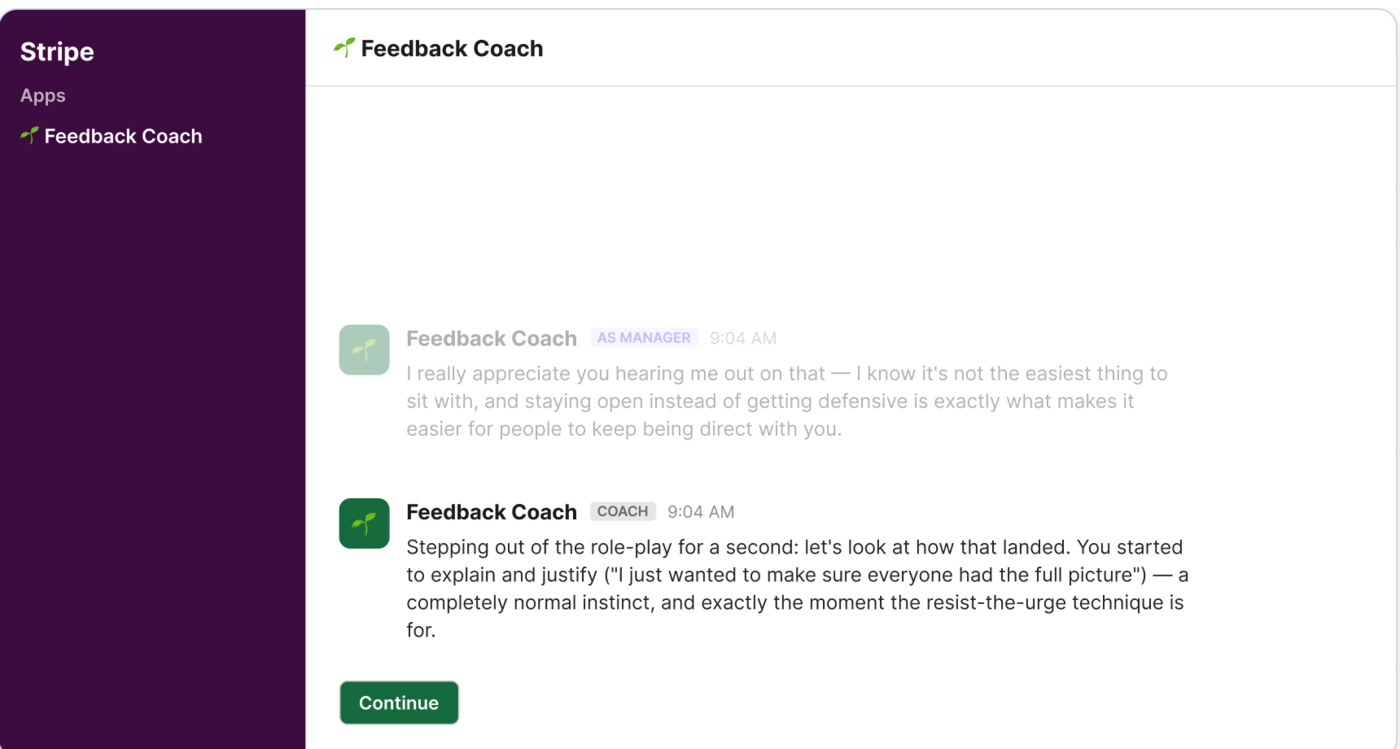
Colored tags and a "stepping out" line mark the difference between the coach role-playing a conversation and the coach actually coaching, so it's never ambiguous which mode you're in.
Working With Claude
I mapped my own process against the AI Fluency Principles, the four D's, right inside the deliverable:
Delegation
Claude handled the research, drafting, and the Figma build. The learning outcomes, scope calls, and anything touching a real person's rubric or privacy stayed with me.
Description
I gave Claude real constraints: the SBIN framework, a hard line between everyday coaching and formal review, and I asked for options and reasoning before anything got built.
Discernment
I caught a writing-style audit that hadn't actually run until I checked.
Diligence
The scoring rubric and practice scenarios are labeled as my own construction, pending real validation. The privacy language is explicit placeholder text, pending stakeholder review.
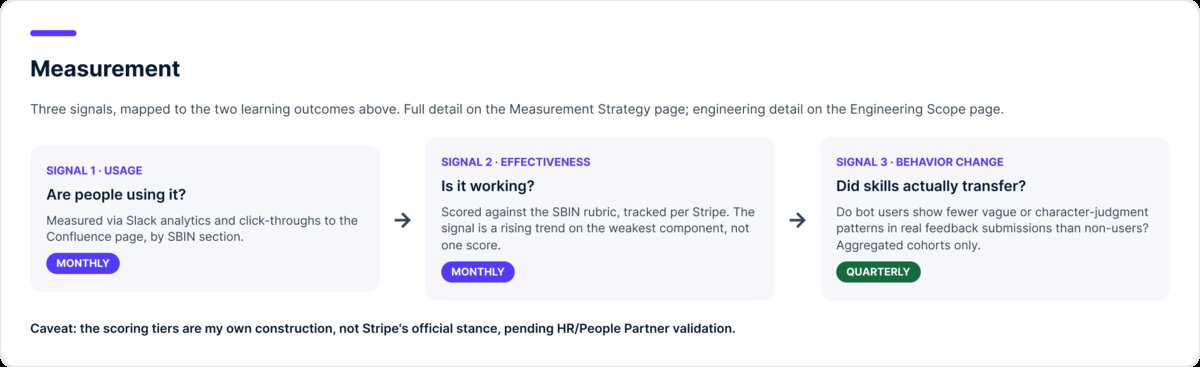
Measurement Plan
Usage
Slack analytics and click-throughs to the guide, tracked monthly
Effectiveness
SBIN rubric score trend on each person's weakest component, monthly
Behavior change
Fewer vague or character-judgment patterns in real feedback, aggregated cohorts, quarterly
Artifacts
A few more screens from the same prototype, for reference.
Specific, not generic. Stripes share their actual scenarios, not hypotheticals, and get advice specific to their situation.
Coaching scored per SBIN component, called out by name, against what this Stripe actually wrote.
The "AS MANAGER" tag marks the role-play; the "COACH" tag marks the moment the bot steps out to give real feedback.
Learning Strategy Brief, covering the design decisions and measurement plan.
Key design decisions
Measurement strategy